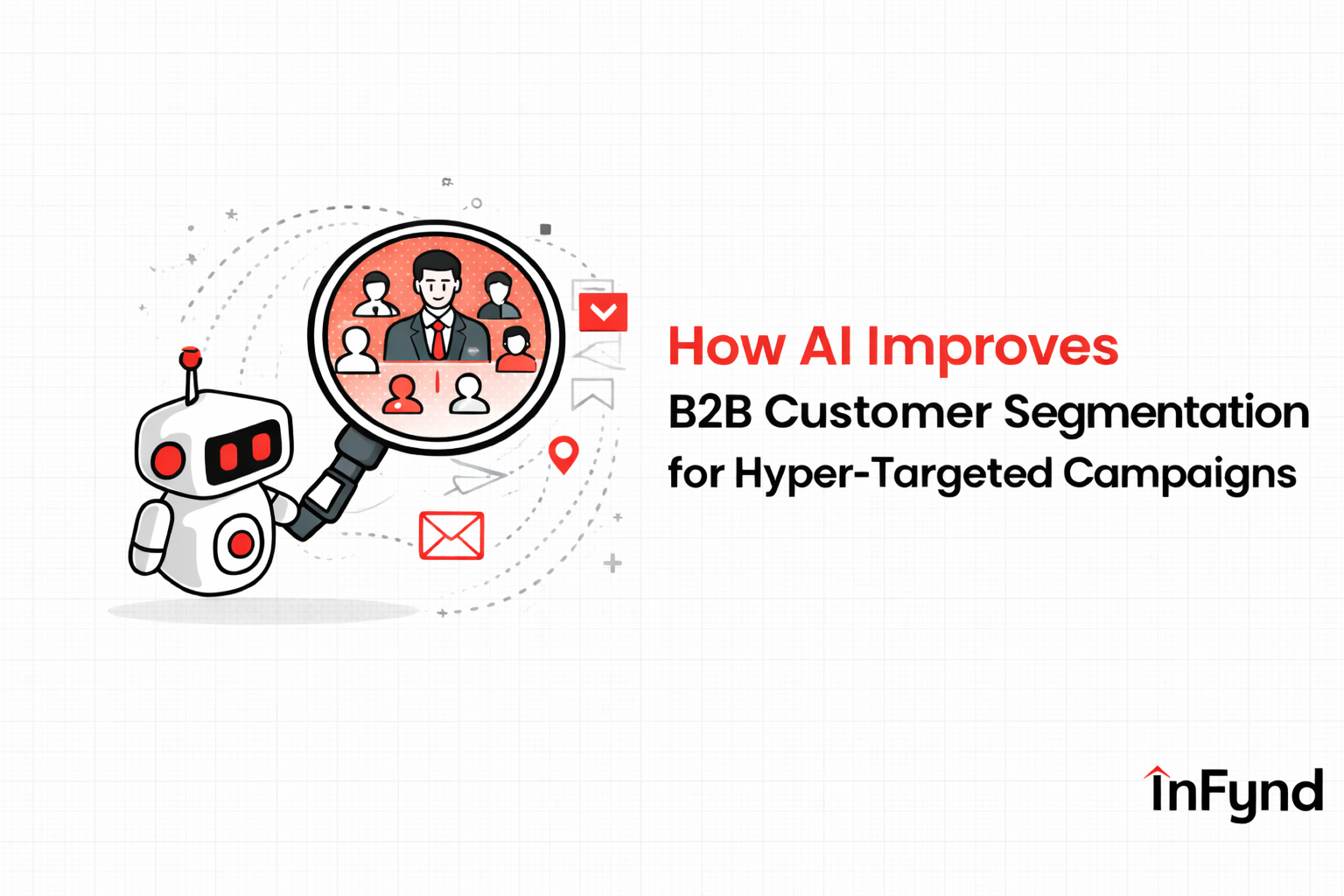
Stop relying on static firmographics. Learn how AI-driven intent segmentation transforms B2B lead generation by pinpointing high-intent buyers in real-time.
The End of Static Segmentation: Why Traditional B2B Targeting Falls Short
B2B purchasing decisions have evolved, with buyers completing up to 70% of their journey before engaging sales, narrowing the influence window for marketers. Traditionally, firmographics like industry, company size, and geography have guided B2B segmentation. However, when every B2B data provider in the UK and beyond offers the same data, these become basic requirements rather than competitive advantages.
The main issue is timing and accuracy. Static segments are inherently outdated, and in dynamic markets, last quarter’s data may not reflect current buyer needs. Static segmentation identifies who a company is but not their immediate needs.
Intent-Based Targeting: A New Approach
Intent-based targeting is transforming B2B marketing by capturing real-time buying behavior. AI-driven segmentation is built on four pillars that enhance B2B marketing effectiveness.
The Four Pillars of AI-Enhanced B2B Marketing
Understanding why static segmentation fails is crucial, but what does an improved system look like? AI-driven B2B customer segmentation is a framework built on four interlinked capabilities.
Pillar 1: Data Enrichment
AI uses more than just firmographics, incorporating behavioural signals such as content interactions and website visits, providing deeper insights than CRM data alone.
Pillar 2: Predictive Modeling
AI analyzes historical and real-time data to identify in-market accounts, using intent data as a leading pipeline performance indicator.
Pillar 3: Personalized Outreach at Scale
AI enables personalized messaging across numerous accounts, aligning content with buying stages and personas efficiently.
Pillar 4: Real-Time Optimization
AI dynamically re-scores accounts based on engagement data, adapting to evolving buyer behavior.
Each pillar is powered by specific AI technologies, crucial for crafting an effective AI customer segmentation strategy.
Selecting the Right AI for Your Strategy
AI comprises distinct capabilities, each suited to different segmentation tasks. Choosing the right tool is key to a successful AI customer segmentation strategy.
ML detects patterns in large datasets, identifying account behavior and engagement clusters beyond traditional methods.
This forecast buying cycles, assigning scores to accounts likely to enter purchasing phases.
Natural Language Processing (NLP)
NLP analyzes unstructured data, identifying buying triggers and sentiment across customer interactions.
Generative AI personalizes final-mile execution, crafting targeted communications for specific segments.
Effective strategies layer all four AI types , leveraging their strengths to optimize targeting.
Intent-Based Targeting: The Core of Personalization
Feeding AI, the right signal is crucial. Firmographics identify who a company is, while intent data reveals current actions, providing a competitive edge.
First-Party vs. Third-Party Intent Signals
First-party intent data, from your touchpoints, is highly reliable. Third-party data, collected from broader web sources, complements this, offering a comprehensive view of the buying journey.
AI in Outreach Prioritization
AI models score accounts based on behavioral signals, focusing efforts on accounts actively in-market, reducing sales cycle inefficiencies.
AI maps hidden conversations in untraceable channels, surfacing unseen buying committee members.
Transitioning from "Who are they?" "What are they doing now?" reframes pipeline building, informing not just who to target, but what to communicate.
AI's Impact on Content Marketing
AI and intent signals work only if content is visible when needed. Generative Engine Optimization (GEO) structures content for AI platforms, enhancing visibility beyond traditional SEO.
AI identifies content gaps at the micro-segment level, allowing precise content targeting based on behavioral insights. Advanced prompting techniques further refine messaging for specific audiences.
Pairing a B2B data provider in UK with content AI aligns segment definitions and messaging.
Measuring AI-Driven Campaign Success
AI-enhanced segmentation must improve key metrics like Customer Acquisition Cost (CAC) and lead-to-opportunity conversion rates. AI filters low-intent accounts, reducing CAC and improving pipeline quality.
AI-driven strategies enhance Sales and Marketing alignment, facilitating smoother lead handoffs. Improved Customer Lifetime Value (LTV) results from better-fit customers who churn less and expand more.
Conclusion: Crafting Your AI-First Segmentation Strategy
AI-driven intent segmentation is becoming essential for effective B2B lead generation. Start by auditing your data quality, as poor data undermines AI models.
The human-AI partnership is central, with AI identifying patterns and teams building relationships. Ready to leverage smarter data? Explore InFynd's lead generation tools for high-quality, intent-enriched data.