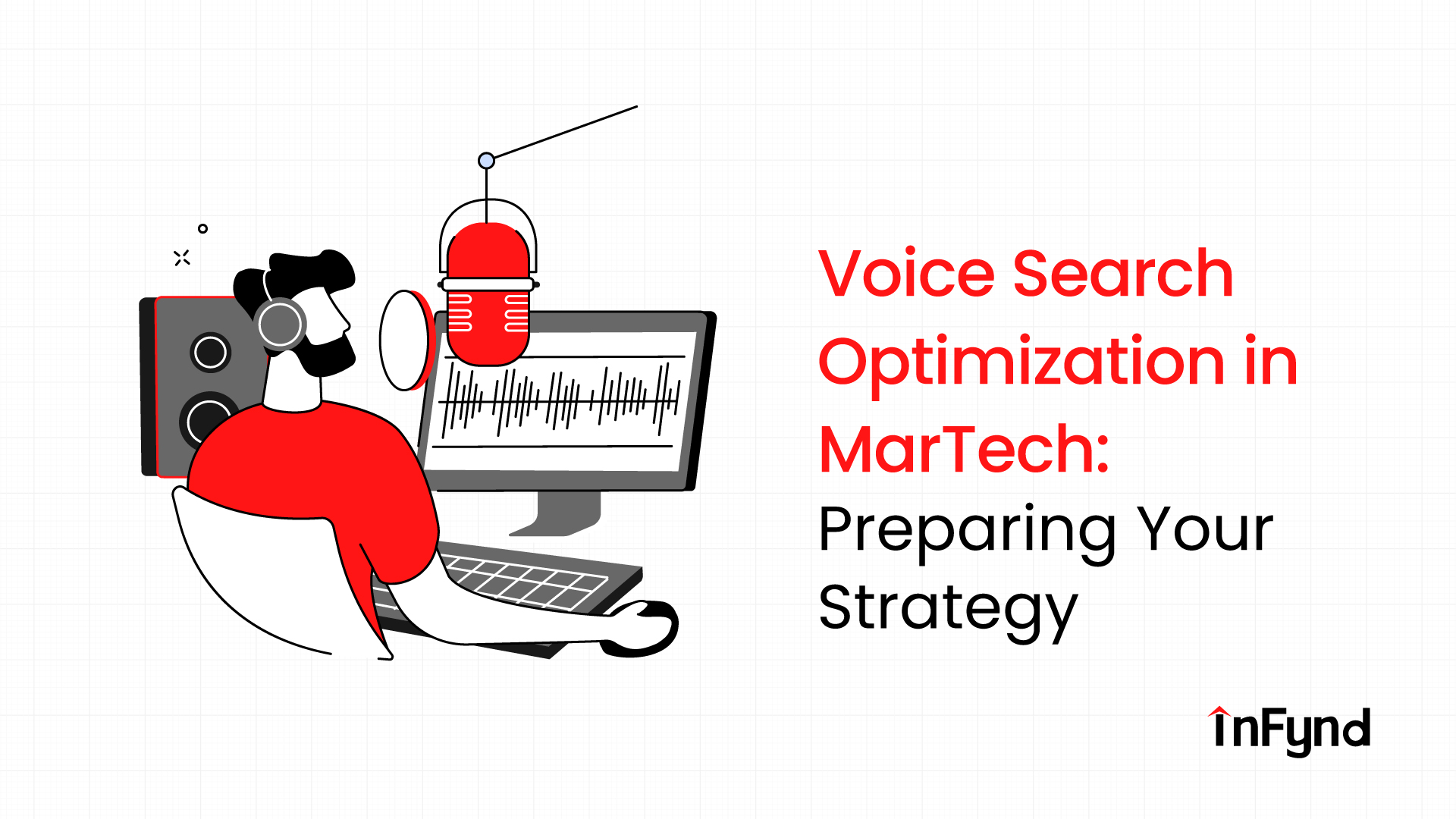
Voice search is reshaping MarTech. Learn how conversational queries, local SEO, AI tools, and optimized content help brands stay discoverable and competitive.
Voice search isn’t some far-off sci-fi pipe dream anymore; it’s here, and it’s changing the way businesses connect with consumers. Instead of typing a question into Google, they’re talking to their smartphones, smart speakers, or even their car. Think of it as your pocket PA—Alexa, Siri, or Google Assistant. Within the MarTech ecosystem, this shift is huge because it alters how marketers produce, distribute, and monetize content to be found in voice-led search.
So what does voice search have to do with MarTech? That’s because, as we all know, martech lives and dies on data and behavior. With voice search changing the way we ask it questions, it upends keyword strategies and content formatting as naturally as it does personalization and even analytics.
Voice search has really taken off recently. With the proliferation of smart devices, we’ve left the keyboard era behind and transitioned into talking. As much as you’re shouting, “Hey Siri, get me the closest coffee shop,” or “Alexa, spin some beats.” These activities are so ingrained in our lives—impacting the way we consume media, where we shop, and how we interact with brands.
Expansion of smart speakers and voice assistants.
This change has been driven by the success of smart speakers like Amazon Echo , Google Nest, and Apple HomePod . And tens of millions of households have at least one smart speaker, and adoption is still growing. Mix that with smartphones and smart TVs and even connected cars, and you begin to have a sense of just how omnipresent voice-first devices are. For marketers, that means more points of engagement where customers engage with your brand—without typing a word.
Changing consumer search behavior
Because voice search is transforming consumer behavior in ways text search never could. For example, users do voice searches when they need a quick answer, want hands-free convenience, and want to do a local search. You’re much more likely to ask, ‘Where’s the best pizza near me?’. Then type it while driving. This pivot forces brands to optimize content for how real humans talk, not just write.
A couple stats showing how voice search is taking off.
The numbers speak volumes. Research predicts that by 2025, more than 50% of all searches will be voice searches. Younger generations, especially, are embracing it faster—using voice assistants for everything from product suggestions to transactions. For MarTech, these stats highlight a crying call to action—if you don’t whip your voice search strategy into shape today, you’ll be ghosted in tomorrow’s digital world.
Decoding Voice Search in the MarTech Matrix
Voice search doesn’t exist in a vacuum; it affects MarTech stacks, from CRM to analytics to automation platforms and personalization tools. Now, marketers will want to know how this integration operates to capitalize on its capabilities.
The impact of voice search on MarTech
When consumers make voice queries, that data looks different from normal search. So instead of brief, disjointed keywords, marketers get rich insight in the form of full, conversational sentences. This gives MarTech platforms more context around intent. For example, ‘best budget phone under $1500’ will give you a lot more meat than just ‘budget phone.’ It’s this context layer, of course, that allows MarTech tools to more finely target audiences and customize experiences.
Integrate voice search with your CRM, analytics, and automation tools.
CRMs can track buyers on voice-generated calls, and analytics tools can show which voice queries generate traffic. Automation tools—think chatbots or email marketing software - can then be tuned with this information. For example, if in voice search, your customers are asking about store hours, then a bot can be trained to respond to that.
How to Build a Voice Search Optimization Plan.
Building a voice search strategy in MarTech is more than keyword wordsmithing. It’s about rethinking how your brand serves those that speak but do not type to search. And this tipping point requires a more human conversational tone that reflects the tempo of common usage. Let’s decompose it.
Conducting voice search keyword research
Keyword research for voice search, of course, is a whole different beast from traditional SEO. Instead of short, two-word queries like “best headphones,” voice users ask questions like “What are the best noise-canceling headphones for travel under $200?” Note, though, how the second is longer and harder.
Marketers should focus on identifying long-tail keywords and question-based phrases. Things like AnswerThePublic, SEMrush, or even Google’s “People Also Ask” are amazing for figuring out how actual humans phrase their questions. And nailing these in your content will help keep your brand popping up in voice searches.
Another key tactic is intent mapping. Be it quick stats, local vendors, or purchase guidance. By dividing keywords into informational, navigational, and transactional intent, MarTech professionals can create corresponding content.
Optimizing content for conversational queries
This means that voice search content should be optimized to answer questions in a direct, conversational way. Treat your content like a friend—not a dictionary. So don’t keyword stuff; just write like you’d speak.
Instead of: “Our skincare products are the best.”
Try: “If you’re asking, ‘What’s the best skincare routine for dry skin?’ we’ve got a step-by-step guide that works. ”
Creating FAQ-style pages is one of the best strategies here. They mimic the way people ask voice queries, enabling search engines to leech answers effortlessly. Structured, clear, and concise answers improve your chances of landing in featured snippets—often read aloud by voice assistants.
Designing FAQ pages for voice search
FAQ pages, on the other hand, are a gold mine for voice search SEO. They want to inquire, and FAQ pages allow that. But the trick is getting them down.
Use natural, conversational language.
Keep responses brief, brief and less than 30 words (perfect for voice assistants).
Hit variations of questibrief, e.g., “How do I order online?” vs. “Can I buy online?”).
An FAQ page also helps you catch multiple stages of the buyer journey. something like ‘What is digital marketing? services top-funnel users, and ‘What’s the best MarTech platform for small businesses?’ resonates with purchase-ready leads.
When you’re smart about constructing FAQs, you help search engines surface your answers—and your brand—as the authority voice in your sector.
Local SEO and Voice Search
Voice search is incredibly tied to local intent. Say, for instance, you type, ‘Where’s the closest Italian restaurant?’ Google uses location to deliver results to you. For local businesses this is massive.
GBP tips for voice optimization
Your Google Business Profile (GBP) is your ticket to showing up in voice searches. Make sure:
Your business name, address, and phone number (NAP) are accurate.
You enter categories, services, and hours.
You submit and respond to reviews (voice assistants often read them).
For example, if I say, ‘Get me a top plumber near me,’ then strong GBP optimization is going to get your company shown.
Geolocation MarTech tools for voice
New MarTech tools allow for hyper-local targeting. Services like the Moz Local or BrightLocal platforms, for instance, stitch your data across directories, providing you a uniform presence. Combined with geolocation push notifications and personalized campaigns, you’ll reach voice searchers at the very moment when they’re ready to buy.
Voice search optimization case studies
There’s nothing better for learning than real-world case studies, every so often. Some brands that jumped early on voice search experienced incredible outcomes.
Brands' voice search is helping grow
Domino’s Pizza : Allows customers to order pizza using Alexa and Google Assistant, making the process seamless.
Sephora : Offers voice-activated beauty tutorials and booking options, creating convenience for customers.
Nestlé : Directs recipes through voice assistants, connecting product marketing with everyday life.
These brands prove that voice search is about more than buzz—it’s a driver of sales, engagement, and loyalty.
Here are Some Voice Search Optimization Mistakes to Avoid.
And yet, with all this potential, far too many brands suck at executing voice strategies. Avoiding these mistakes will save you!
Most voice searches are local. If you don’t optimize for “near me” and GBP, you’ll lose a monster amount of customers.
Overlooking structured data
No voice without schema markup… Search engines won’t know enough about your content to suggest it in voice results. This is one of the most common and costly mistakes.
Not prioritizing mobile optimization
And because voice queries are often on mobile, a slow, clunky site can kill your chance. Always check mobile speed, responsiveness and UX
Voice search is transforming the way we discover and interact with brands. In the MarTech ecosystem, it’s not a buzzword—it’s a pivot you can’t ignore. Marketers can future-proof by optimizing for conversational queries, local SEO, AI leverage, and personalization.
Whoever evangelizes voice search today is king tomorrow. Whether it’s smart content, structured data, or new MarTech tools, the sky is the limit.
1. What sets voice search apart from ‘regular’ SEO, then?
Voice search is conversational, longer, and more natural than brief typed queries. There’s also a significant focus on intent and local listings.
2. What kind of business makes voice search optimization make the most sense?
Local businesses, online businesses, hotels, health centers, and service providers gain the most since the users usually need local or instant solutions.
3. What MarTech to optimize for voice search?
SEMrush, BrightLocal, AnswerThePublic, and AI platforms such as Dialogflow or HubSpot CRM function perfectly with voice optimization.
4. Is voice search suitable for B2B businesses?
Indeed. B2B purchasers are using voice search, though, to research, compare products, and solve problems. Optimizing for chat-based queries can help you reach decision-makers
5. What does the future hold for voice search marketing with AI?
AI will drive hyper-personalization, predictive analytics, and conversational AI that makes voice interaction natural and effective