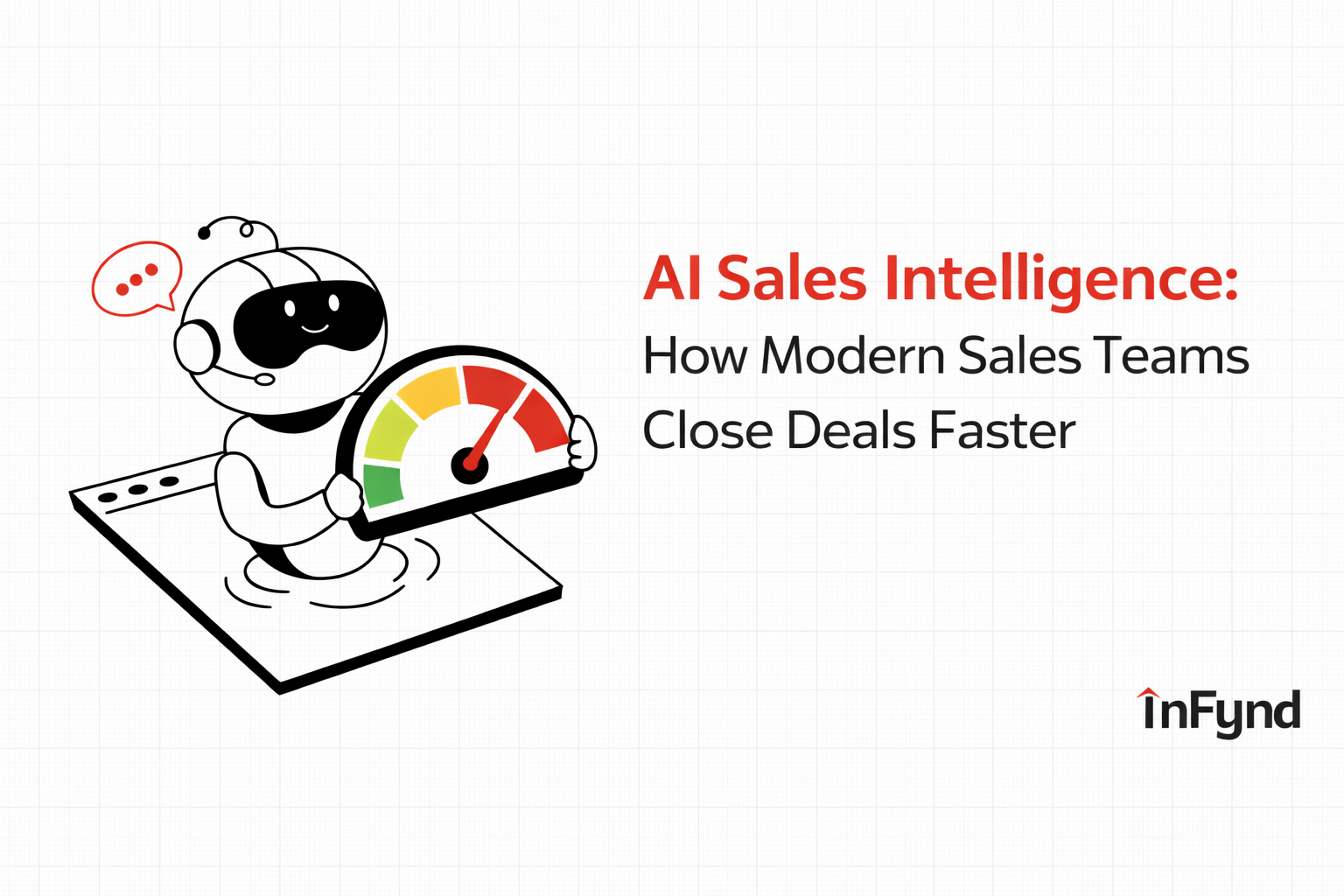
Discover how AI sales intelligence empowers teams to close deals faster, enhance lead generation, and improve sales forecasting with cutting-edge tools.
Understanding AI Sales Intelligence
The sales landscape has transformed dramatically. While traditional teams spend countless hours on manual prospect research, modern teams utilise artificial intelligence to close deals 40% faster. AI sales intelligence leverages advanced algorithms to convert raw data into actionable insights, identify high-value opportunities, forecast purchasing behaviors, and optimise the sales process.
AI sales intelligence combines machine learning with extensive databases, including company details, buyer signals, and historical transaction patterns. This technology assesses numerous data points such as growth indicators and technology adoption to target prospects with high conversion potential. AI systems quickly enhance profiles by buying intent signals, freeing sales representatives from exhaustive online research.
The impact is substantial. Companies employing sales forecasting AI achieve up to a 30% increase in pipeline prediction accuracy. This precision supports strategic resource allocation, mid-quarter tactic adjustments, and consistent revenue target achievement.
Modern AI platforms seamlessly integrate with CRM systems to offer
Predictive lead scoring to evaluate conversion probability
Automated data enrichment to keep information current
Behavioral analysis for optimal engagement timing
These systems act as force multipliers, continuously learning and refining recommendations to shorten sales cycles and improve win rates. In competitive markets, teams equipped with AI and a dependable B2B data provider hold a significant advantage.
Comparing AI Sales Tools: Efficiency and Functionality
The Sales AI landscape is thriving, with numerous platforms promising to revolutionize prospect engagement. However, not all provide the same level of efficiency or functionality. Effective tools stand out by directly impacting deal velocity.
Platforms vary in focus, some emphasize data enrichment, others monitor behavioral signals, and some use predictive analytics. Research indicates that 62% of sales teams utilize AI tools, yet many struggle to measure pipeline improvements.
Three factors often influence performance: data quality, machine learning model sophistication, and integration capabilities. Effective solutions merge multiple data sources to prioritize meaningful conversations and reduce time spent on low-probability opportunities.
Functionality alone doesn't ensure success. Practical solutions balance sophistication with usability, delivering intelligence without overwhelming teams. This balance is crucial for accurate lead scoring, especially when leveraging an AI sales intelligence tool.
Hypothetical Scenario: Implementing AI in a Sales Team
Consider a mid-sized software company facing inconsistent deal velocity. Sales reps spend hours researching accounts and manually updating CRM records , resulting in a 12% conversion rate and a 94-day sales cycle.
Implementing AI sales tools with predictive scoring and data enrichment brings notable changes. Lead scoring accuracy improves by 40%, and the system enriches contact records, saving 15 hours of weekly research per rep.
The platform uncovers patterns beyond human analysis, such as conversion rates tripling prospects engaging with technical pages and live demos. Real-time alerts enable immediate, relevant outreach.
By the fourth month, the average deal cycle shortens to 61 days, and conversion rates increase to 19%. Reps spend 70% of their time selling rather than on administrative tasks. According to PwC's AI forecasts, organizations experience productivity gains of 30-40% within the first year.
Limitations and Considerations
Despite the advantages, organizations must approach AI sales platforms with realistic expectations.
Data Quality Dependencies
Platforms are only as effective as their data sources. Poor data quality can lead to diminished results, necessitating manual cleanup for optimal AI performance.
Human Judgment Remains Essential
AI excels at recognizing patterns but cannot replicate nuanced human understanding. Successful implementations view AI as an augmentation tool.
Privacy and Compliance Considerations
International data protection regulations create compliance complexities. Careful vendor evaluation and governance frameworks are necessary.
Consider integration costs, training investments, and ongoing resources. Weigh efficiency gains against total investment before full deployment.
Artificial intelligence sales platforms have transformed B2B sales, enabling faster opportunity identification, targeted engagement, and revenue growth. Successful implementations establish clear metrics, allocate resources for training, and refine based on performance data.
However, technology alone doesn't close deals. Combining AI insights with relationship-building and industry knowledge yields the best results. The gap between AI-enabled organizations and traditional ones will continue to widen as buyers demand personalized engagement.
What is AI sales intelligence?
AI sales intelligence uses algorithms to transform data into insights, optimizing the sales cycle.
How does AI improve lead scoring?
AI analyzes multiple signals to assign predictive scores, improving conversion rates by 45%.
What challenges exist with AI sales tools?
Data quality, human oversight, and compliance are key challenges in AI sales tool implementation.
For more information on AI sales intelligence, visit InFynd.