Long sales cycles drain budget. Reps spend weeks nurturing accounts that were never ready to buy, while genuinely interested buyers go to competitors who reached them first. For UK B2B teams facing tighter budgets and more cautious buyers, the question isn't whether to invest in intent data. It's what return it actually delivers.
What is B2B Intent Data?
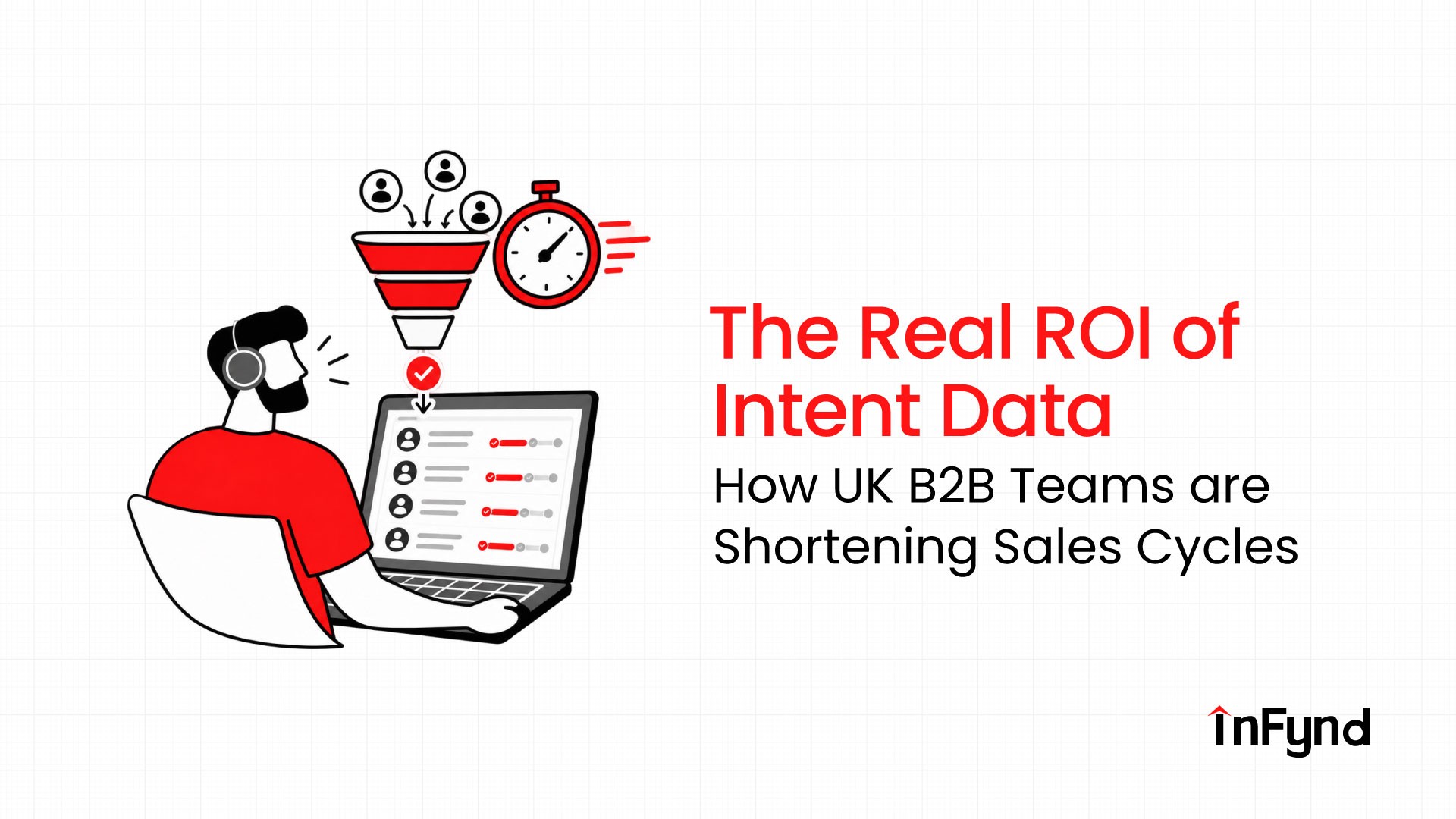
B2B intent data tracks the online behaviour that signals a company is researching a purchase: content consumption, topic searches, and engagement across the web. These buyer intent signals show which accounts are in market right now, so your sales team stops guessing and starts prioritising.
Intent data comes in two forms. First party intent comes from your own website and campaigns. Third party intent comes from external sources and shows research happening elsewhere, often before a buyer ever visits your site.
Why Sales Cycles Run Long
Most B2B sales cycles stretch because of timing problems, not product problems:
• Outreach reaches accounts too early, before a need exists
• Outreach reaches accounts too late, after a shortlist is formed
• Reps chase low quality leads while high intent accounts wait
• Messaging ignores what the buyer actually uses or cares about
Intent data fixes the timing. Combined with accurate contact data, it points reps to the right account, the right person, and the right moment.
Where Intent Data Shortens the Sales Cycle
The funnel below shows how intent signals compress each stage of the B2B sales funnel.
How Intent Data Shortens the B2B Sales Cycle
1. Awareness: Target accounts researching your category
2. Interest: Intent signals rank accounts by buying activity
3. Consideration: Personalised outreach using technographic data
4. Decision: Engage decision makers early
5. Closed Won: Shorter cycle, more wins
Without intent data: Cold outreach, long cycles
With intent data: Timely outreach, faster close
InFynd | Intent and Signals Data
How to Measure the ROI of Intent Data
Intent data ROI is measurable when you track the right metrics before and after rollout:
1. Sales cycle length: average days from first contact to closed won
2. Win rate: share of opportunities that convert
3. Cost per opportunity: total spend divided by qualified opportunities
4. Rep productivity: meetings booked per rep per month
5. Pipeline velocity: how quickly deals move between stages
A simple formula works well: ROI = (incremental revenue minus intent data cost) divided by intent data cost. As an illustrative example, if intent data helps your team close three extra deals a quarter at an average value of 20,000 pounds, that is 60,000 pounds of incremental revenue to weigh against the data investment.
How UK B2B Teams Use Intent Data in Practice
Smarter lead scoring. Accounts showing active research behaviour score higher, so reps work them first. Static scoring based only on job title or company size misses timing completely.
Account based marketing. Intent signals tell marketing which target accounts to prioritise for ads and content, instead of spreading budget evenly across a list.
Personalised outreach. Pairing intent with technographic data lets reps reference what the buyer is researching and which tools they already use, so messages feel relevant rather than generic. InFynd's Intent & Signals data is built for exactly this combination.
Faster follow up. When a high intent account surfaces, reps reach decision makers within hours, not weeks.
Getting Intent Data Right: Common Pitfalls
Intent data only works when the foundation underneath it is sound.
• Poor contact accuracy. Knowing an account is in market is useless if your contact data is outdated. Use verified B2B data so signals connect to reachable decision makers.
• Dirty CRM records. Duplicate and stale records distort scoring. A CRM Data Health Check clears this up before you layer signals on top.
• Incomplete profiles. Data enrichment fills gaps in firmographic and technographic fields so segmentation stays precise.
• Treating intent as a one off. Signals change weekly. Build ongoing monitoring into your workflow.
• Ignoring compliance. UK teams should use GDPR compliant intent data with documented sourcing.
Conclusion
Picture two UK sales teams chasing the same 500 target accounts. One works the list from the top and hopes for the best. The other knows which 40 accounts are researching a solution this week, who the decision makers are, and which tools they already use. Same product, same price, very different quarter.
That gap is the real ROI of intent data, and InFynd is the best B2B data provider for UK teams that want to close it. With InFynd you get:
• Intent and signals data showing which accounts are actively in market
• Verified contacts across 240M+ profiles and 12M+ companies, at 95%+ accuracy
• Technographic and firmographic filters to sharpen targeting and messaging
• GDPR and CCPA compliant sourcing, so every campaign stands on firm ground
If shorter sales cycles and a more predictable pipeline are on your agenda, start by seeing your own target market through InFynd's data.
Explore InFynd's B2B Data Platform →
FAQ
1. What is the ROI of intent data for B2B teams?
ROI comes from shorter sales cycles, higher win rates, and better rep productivity. Track cycle length, win rate, and cost per opportunity before and after rollout to measure it.
2. How does intent data shorten the sales cycle?
It shows which accounts are actively researching, so reps contact buyers at the right moment instead of nurturing accounts that aren't ready.
3. What is the difference between intent data and technographic data?
Intent data shows what a company is researching now. Technographic data shows which technologies it already uses. Together they shape both timing and messaging.
4. Is intent data GDPR compliant in the UK?
It can be, provided your provider documents how signals are sourced and processed. Always review a vendor's compliance approach before using the data.
5. How quickly can teams see results from intent data?
Many teams see improvements in response rates within the first few weeks, though full impact on sales cycle length is usually clearer after one or two quarters.